TechCrunch is right when they say that audio is about to become the interface of the future. Silicon Valley is moving collectively in the same direction. But the most interesting question is not how we will talk to technology in the future.
This is it:
What happens when speech is not just the way we control technology – but the way work is actually done?
2026 is the year speech becomes standard
This is the year when voting stops being a feature and becomes the frontline of daily work. Not because the screen disappears, but because something more efficient takes over.
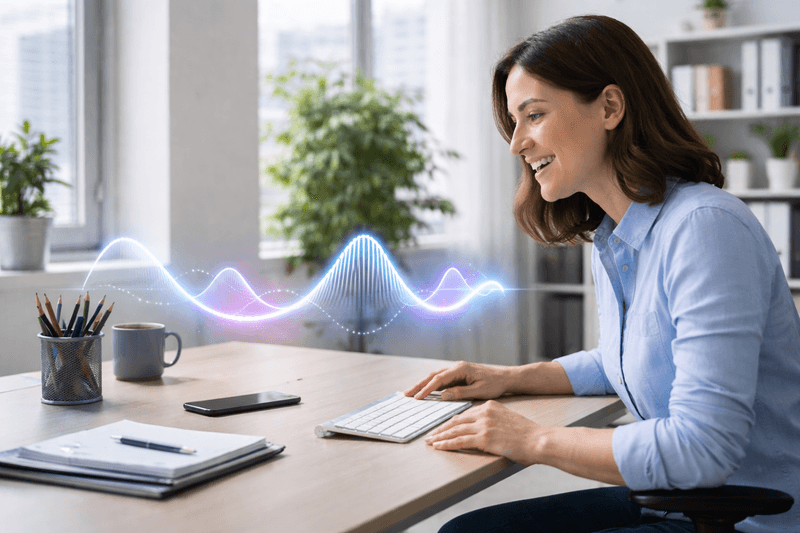
Speech is faster than the keyboard, more intuitive than menus, and doesn't require visual attention. In a everyday life characterized by interruptions and multitasking, audio is simply better suited to the pace at which we work.
That's why OpenAI, Google, Apple, and Meta are investing heavily in real-time speech and multimodal AI.
But here is the point that is often overlooked:
They build the platforms. They do not build the jobs.
The platforms stop, start Threll
Silicon Valley makes it possible to talk to technology.
Threll makes it possible for technology to speak – and work – on behalf of businesses.
We do not build voice assistants.
We are building performance voice AI.
It means systems that actually take on roles:
- gone on sale
- accept calls at the switchboard
- qualifies, follows up, and schedules meetings
- are available when humans are not
This is not a new user interface.
There is new workforce.
Why Threll is particularly well positioned
Three things make the difference.
First of all: We sell labor, not technology.
Customers buy results – not AI itself. Threll delivers completed work in sales and customer dialogue.
Secondly: Language is not cosmetics.
Through Voice Lab, we have turned the Norwegian language and dialects into a competitive advantage. In real conversations, trust is determined by tone, tempo, and recognition. Global standard AI cannot deliver those qualities well enough.
Thirdly: We operate where Big Tech will not.
The big players will own the models and platforms. They will not own the responsibility for local conversations, actual customers, and real consequences. This is where Threll belongs.
Additionally, Threll is intentionally built without locking into a single technology provider. We use the best available at any given time – for the customer's benefit, not for the platform's.
Why the time is now
This shift doesn't happen overnight, but it is happening faster than many believe.
Businesses that are just starting now:
- scales capacity without scaling costs
- removes bottlenecks
- become available 24/7
- relocates work there where it can be done autonomously
Those who wait will continue to optimize manual processes in a world that has already moved forward.
This is not just the interface of the future
It is the future way of working.
2026 is the year this becomes impossible to ignore.
The question is not whether businesses will adopt this.
The question is who will do it before the competitors make it standard.