Outbound calling

Your voice agent is calling out. From which number?

Norway's telecom regulator has ruled that call centres may not use 8-digit mobile numbers as their caller ID. If your voice agent makes outbound calls there, the number is a compliance question before it is a marketing choice.

IngridIngrid,
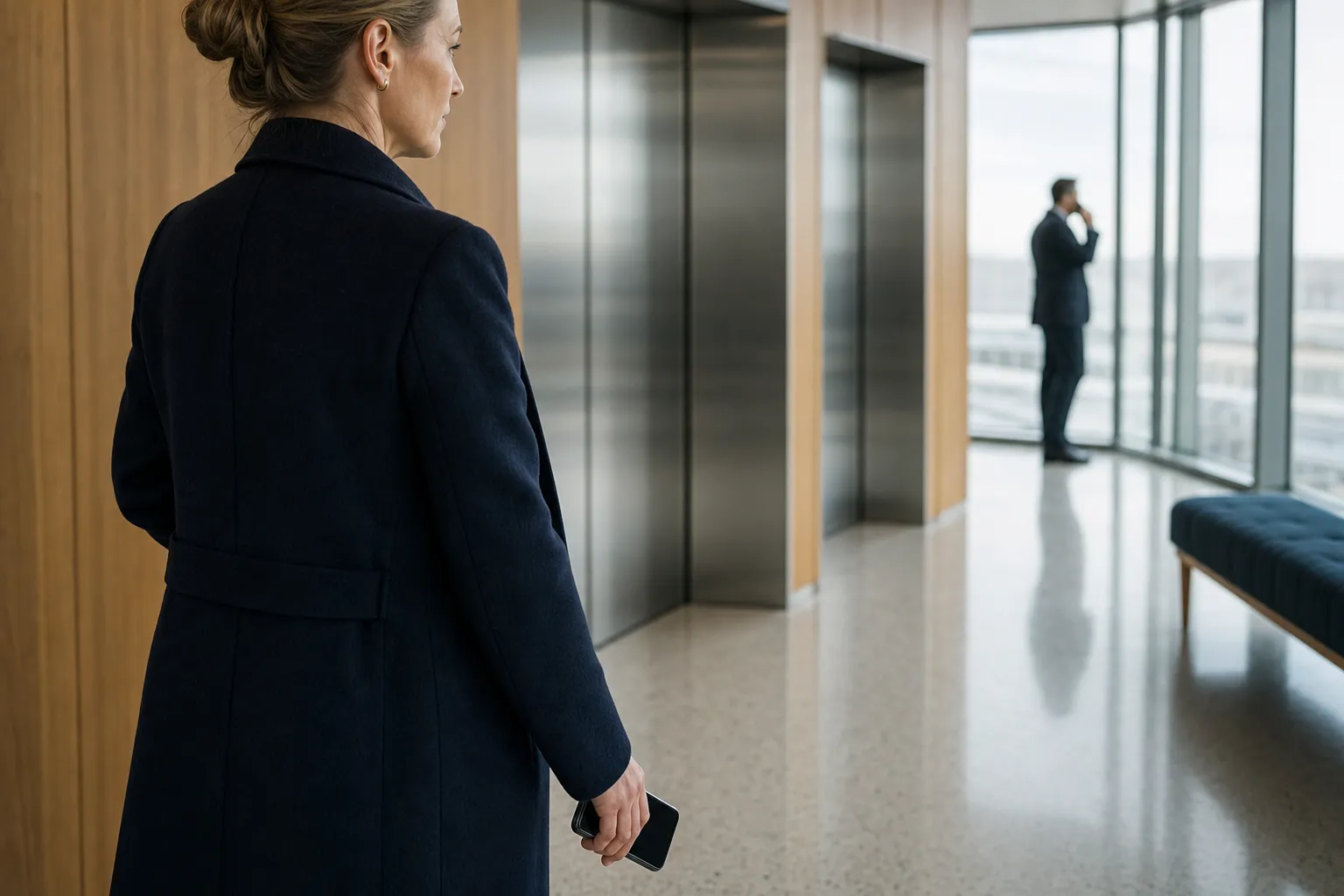
A woman in a dark coat stands in an office lift lobby having just lowered her phone to her side with the screen turned away, while a man further back by the glass facade talks on his phone

Almost all the preparation before an outbound campaign goes into what the agent will say. Who it calls, what time of day, how it opens, when it gives up.

What decides whether anyone picks up at all is settled before it speaks: the number that lights up on the screen. In Norway, that is no longer a free choice.

The clarification most people have not read

In a letter to Norwegian operators dated 11 November 2025, the Norwegian Communications Authority ruled that 8-digit mobile numbers may not be used by “call centres etc.” as the caller ID for outbound calls.

The definition is broad. “Call centres etc.” means businesses conducting extensive telephone-based activity – sales, marketing, opinion surveys or information gathering – often through standardised processes aimed at a wide audience. It covers both those doing it on their own account and those doing it on behalf of someone else.

A setup running outbound voice agents at volume fits that description fairly precisely. The calling is often the business itself, not an appendage to it.

The reasoning is not primarily consumer protection. It is resource management and trust. The mobile number range is sized to Norway's population, not to calling activity – and the regulator notes that some call centres rotate mobile numbers frequently precisely to slip past operators' filters. At the same time, the mobile number is the identifier Norwegian services rely on for two-factor authentication and one-time codes. Wear down trust in it, and something else wears down with it. It is the same trust a well-prepared fraud call runs on.

And the countermeasures work. The digital shield the mobile network owners established in November 2024 had, by the time the letter was written, blocked more than 80 million fraud attempts using spoofed Norwegian mobile numbers.

What is actually permitted

Number type Outbound sales and surveys What the recipient sees
8-digit mobile number No Looks like a private individual
Landline number Yes A geographic area
Five-digit number Yes Recognisably a business
Number in the 815 range Yes Recognisably a business
Withheld number No Nothing

Landline numbers are plentiful: more than 19 million are free, against a mobile range that has at times been down to a couple of hundred thousand. Around 7,400 five-digit numbers are available, and they carry a property that is worth something in itself – the recipient understands immediately that a business is calling.


Six questions before you switch outbound on

Which number appears on the recipient's screen? Not the number on the contract. The one actually transmitted as caller ID. In many setups those are two different things, and only the second one is what this concerns.

Is the number registered and searchable – and does the lookup point to the right business? Norwegian marketing law forbids telemarketing to consumers from a withheld number, or from a number that is not registered and searchable in directory services. The regulator, in consultation with the Consumer Authority, further advises that the lookup must identify the actual party behind the call – not merely some company in the chain.

Does the setup rotate caller IDs mid-campaign? Rotation to avoid filtering is named explicitly in the clarification. It is named as a problem, not as a technique.

What happens when someone calls back? An outbound number is also an inbound number. Place a thousand calls before lunch and a share of them come back after lunch, and that path has to be answered by someone who knows what the call was about.

Does the agent say it is AI in its opening line? The disclosure duty applies regardless of who dialled first. Outbound it is easier to live with than inbound: the person being called did not ask for the conversation in the first place.

Is this really sales and marketing? A clinic calling its own patients to confirm an appointment is not running opinion surveys aimed at a wide audience. The line is not sharp. It is worth settling with your operator before you start calling, not afterwards.

The number is the opening line

All the work on what the agent will say assumes somebody answers.

The recipient makes that judgement in under a second, without hearing a word, on the basis of eight digits or five. An unknown mobile number in 2026 is as often a warning as an opportunity – which is exactly why it had a high answer rate for as long as it lasted.

Threll.ai builds voice agents in Norwegian, Swedish and Danish. A setup calling from the right kind of number will probably get fewer calls answered than one that looks like a private individual. That is not a weakness in the setup. That is the entire point.

Related Articles

Continue reading more articles